Registering for your first BLS class can feel more complicated than the training itself. You may be comparing BLS with regular CPR, wondering whether an online course is enough, or trying to understand which completion card your employer or nursing program expects.
For most first-time students in Dublin, CA, the safest approach is to check the exact requirement before enrolling. A BLS CPR Certification Course is primarily designed for healthcare professionals, trained first responders, and students preparing for clinical roles. People outside healthcare may need a standard CPR/AED, First Aid, or pediatric course instead.
During BLS training, students learn how to recognize life-threatening emergencies, perform high-quality CPR, provide ventilations, use an automated external defibrillator, respond to choking, and work as part of a resuscitation team. The course includes practical skills, so first-time learners should expect active participation rather than a lecture-only experience.
Key Takeaway: Confirm the required course name, accepted training organization, and class format before registering. If the requirement specifically says “BLS Provider,” a general CPR certificate may not be an acceptable substitute.
What Is a BLS CPR Certification Course?
BLS stands for Basic Life Support. Although CPR is a major part of BLS, the course goes beyond practicing chest compressions.
BLS training is designed for people who may respond to cardiac or respiratory emergencies in healthcare or other professional settings. It covers adult, child, and infant CPR, effective breaths and ventilations, early AED use, choking response, and coordinated multi-rescuer care.
Team response is one of the clearest differences between BLS and many community CPR courses. In a healthcare environment, one responder may begin compressions while another prepares an AED, manages ventilations, or activates the facility’s emergency-response system. BLS training helps participants understand how those roles work together.
The course may be required for:
- Nurses and nursing assistants
- Physicians and medical assistants
- Dental professionals
- EMTs and other trained responders
- Respiratory, physical, and occupational therapy personnel
- Nursing and allied-health students
- Other employees whose jobs involve patient care
Requirements vary among workplaces, schools, clinical sites, and licensing organizations. Students should use their written onboarding or enrollment instructions rather than assuming that every CPR-related course is interchangeable.
BLS, CPR, and First Aid Are Not the Same Course
First-time students often see several course names on the same registration page. Understanding the purpose of each one can prevent an enrollment mistake.
BLS
BLS is generally intended for healthcare professionals and trained responders. It emphasizes high-quality CPR, ventilations, AED use, team dynamics, and response for adults, children, and infants.
CPR/AED
A general CPR/AED course is commonly intended for community members or employees who do not work in clinical care. It may be appropriate for fitness professionals, office teams, coaches, parents, or other nonmedical participants.
First Aid
First Aid training addresses injuries and illnesses that may require immediate assistance before professional help becomes available. Depending on the course, it may be combined with CPR and AED instruction.
ACLS, PALS, and NRP
Advanced Cardiovascular Life Support, Pediatric Advanced Life Support, and Neonatal Resuscitation Program courses serve more specialized audiences. They should not be selected simply because they sound more advanced. Register for the course specifically required for your role.
A teacher in Dublin may need pediatric First Aid and CPR, while a nursing student preparing for a clinical placement may need BLS. A dental-office employee could also have a specific BLS requirement set by the employer. Checking the exact wording takes only a few minutes and may save you from completing the wrong class.
What Happens During Your First BLS Course?
A first BLS class usually combines explanation, demonstration, practice, feedback, and skills assessment. The goal is not to see how much medical terminology you already know. The course is structured to teach and evaluate specific response skills.
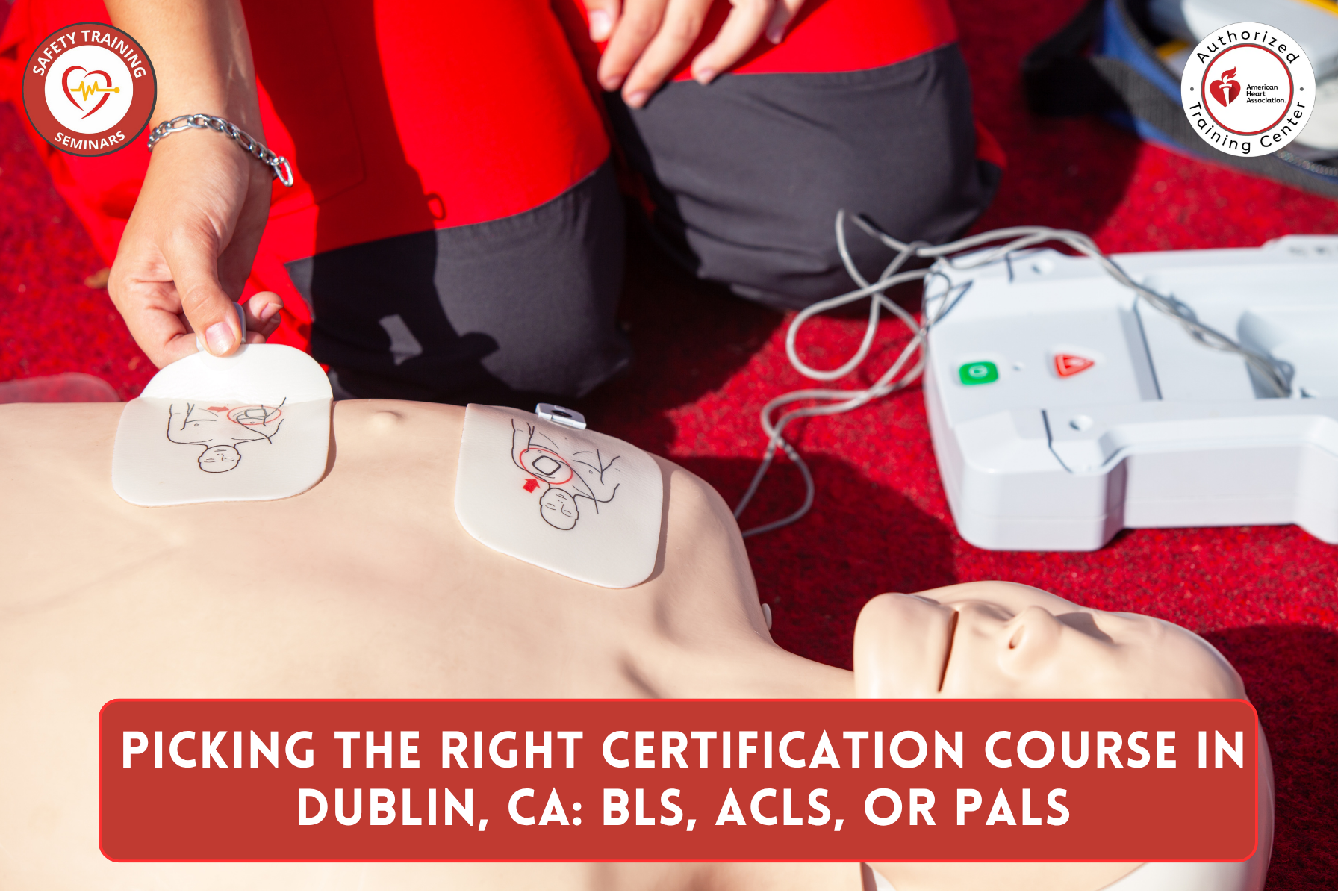
Students can expect to work with CPR training manikins and AED training equipment. Depending on the course format, the session may include:
- Practicing adult, child, and infant CPR
- Learning correct hand placement and compression technique
- Delivering breaths or ventilations
- Using an AED in a simulated response
- Responding to foreign-body airway obstruction
- Switching roles during multi-rescuer CPR
- Completing knowledge and skills assessments
The American Heart Association’s current BLS course reflects its 2025 CPR and Emergency Cardiovascular Care guidelines. Those guidelines cover recognition of cardiac arrest, activation of emergency response, high-quality CPR, AED use, respiratory arrest, and foreign-body airway obstruction.
It is normal for first-time students to need several practice attempts. Feedback is part of the learning process. Focus on following instructions, maintaining a steady rhythm, and correcting your technique when prompted.
Classroom, Blended, or Self-Guided: Which Format Should You Select?
Current BLS options may include classroom, blended, and self-guided learning formats. Each route includes a practical skills component, but the order and learning environment differ.
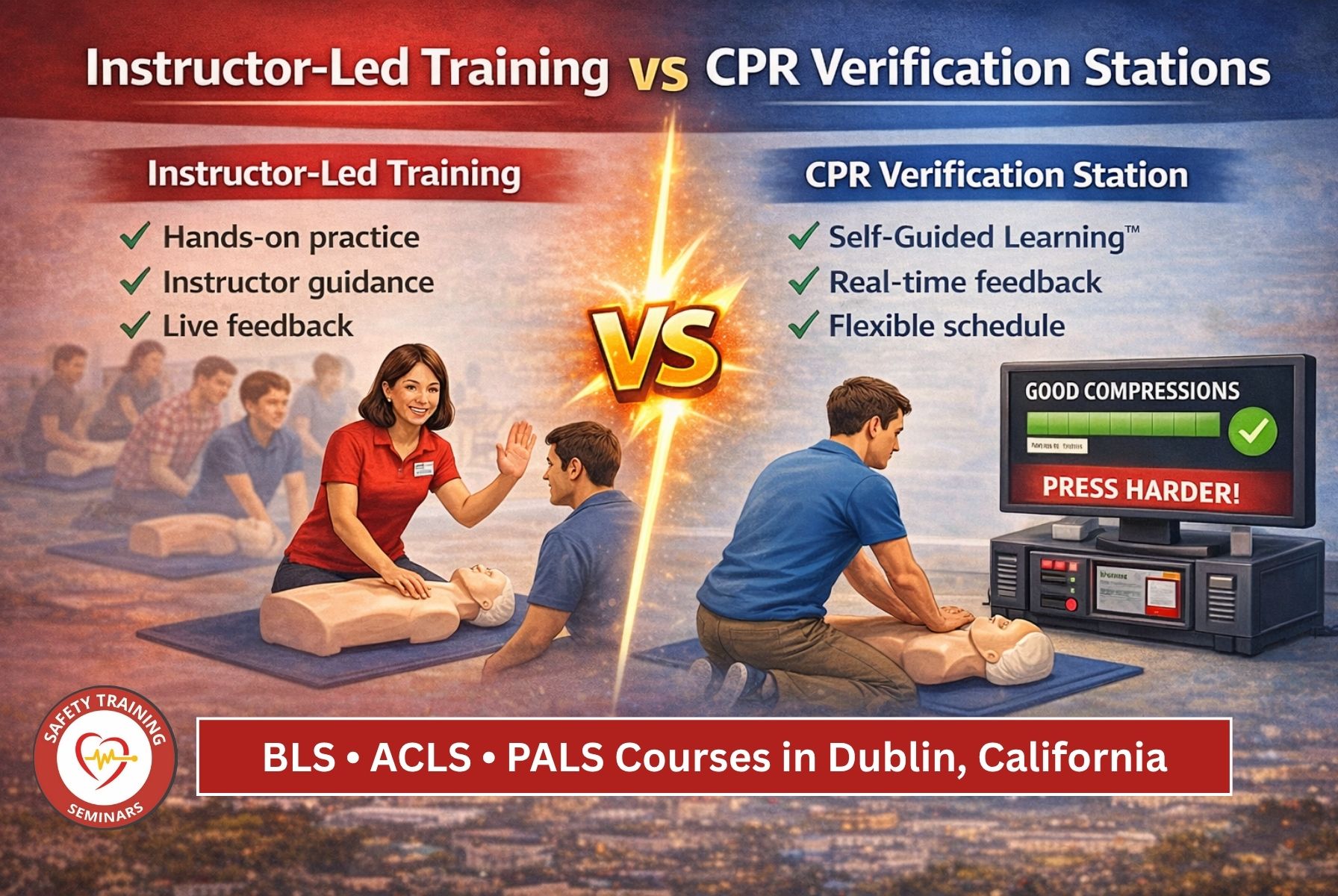
Instructor-Led Classroom Training
In a classroom course, the cognitive instruction, demonstrations, hands-on practice, and testing take place during an instructor-led session. This format may suit first-time students who prefer immediate explanations and guided practice throughout the course.
Blended Learning
Blended learning separates the knowledge and skills portions. Students complete the online component independently and then attend a hands-on session for practice and testing. Completing only the online portion does not produce the BLS Provider completion card; the required practical component must also be completed.
Self-Guided Learning
In a self-guided option, students complete cognitive learning online and then perform the hands-on portion at a compatible CPR Verification Station. This format can offer more scheduling flexibility while still requiring physical skills practice and verification.
Before purchasing any course, ask your employer or school whether it accepts the planned format. Do not assume that an online-only CPR document will meet a requirement that specifies hands-on BLS training.
How to Prepare for Your First Class
You do not need clinical experience to begin learning BLS, but a little preparation can make the process smoother.
First, read your registration confirmation carefully. If you selected a blended course, complete the assigned online portion before attending the practical session. Save the completion certificate or other proof requested in the instructions.
Wear clothing that allows you to kneel, bend, and practice comfortably. CPR skills are usually performed on a manikin positioned for realistic practice, so restrictive clothing may make the session less comfortable.
Bring any requested identification and course documents. You may also want to arrive with enough time to locate the suite and complete the check-in process without rushing.
Before class, confirm these details:
- Is this the exact BLS course required?
- Is it an initial provider course or a renewal?
- Does it include a hands-on skills assessment?
- Must online coursework be completed beforehand?
- What type of course completion card will be issued?
- Does your employer or school accept that card?
First-time students should avoid registering for a renewal pathway unless the provider confirms that it is suitable for someone without a current credential.
BLS CPR Certification Courses in Dublin
Safety Training Seminars offers CPR, First Aid, BLS, ACLS, PALS, and NRP training through its Dublin location at 7567 Amador Valley Blvd, Suite 102, Dublin, CA 94568. The location page identifies the center as an American Heart Association Authorized Training Center and describes classroom, blended, and self-guided course options.
The center serves healthcare workers, students, workplace participants, and community members in Dublin and the surrounding Tri-Valley area. Its Amador Valley Boulevard location may be useful for residents near central Dublin, Dublin Ranch, and people traveling from communities such as Livermore.
First-time learners can review the Dublin CPR, BLS, ACLS, and PALS course options before registering. Compare the displayed course name with the requirement provided by your employer, educational program, or clinical site.
Students whose work, school, or travel plans take them toward other parts of the East Bay can also review CPR and life-support classes in Alameda or BLS, CPR, ACLS, and PALS courses in Berkeley. Another available location page covers CPR and healthcare certification courses in Emeryville.
What Happens After You Complete the Course?
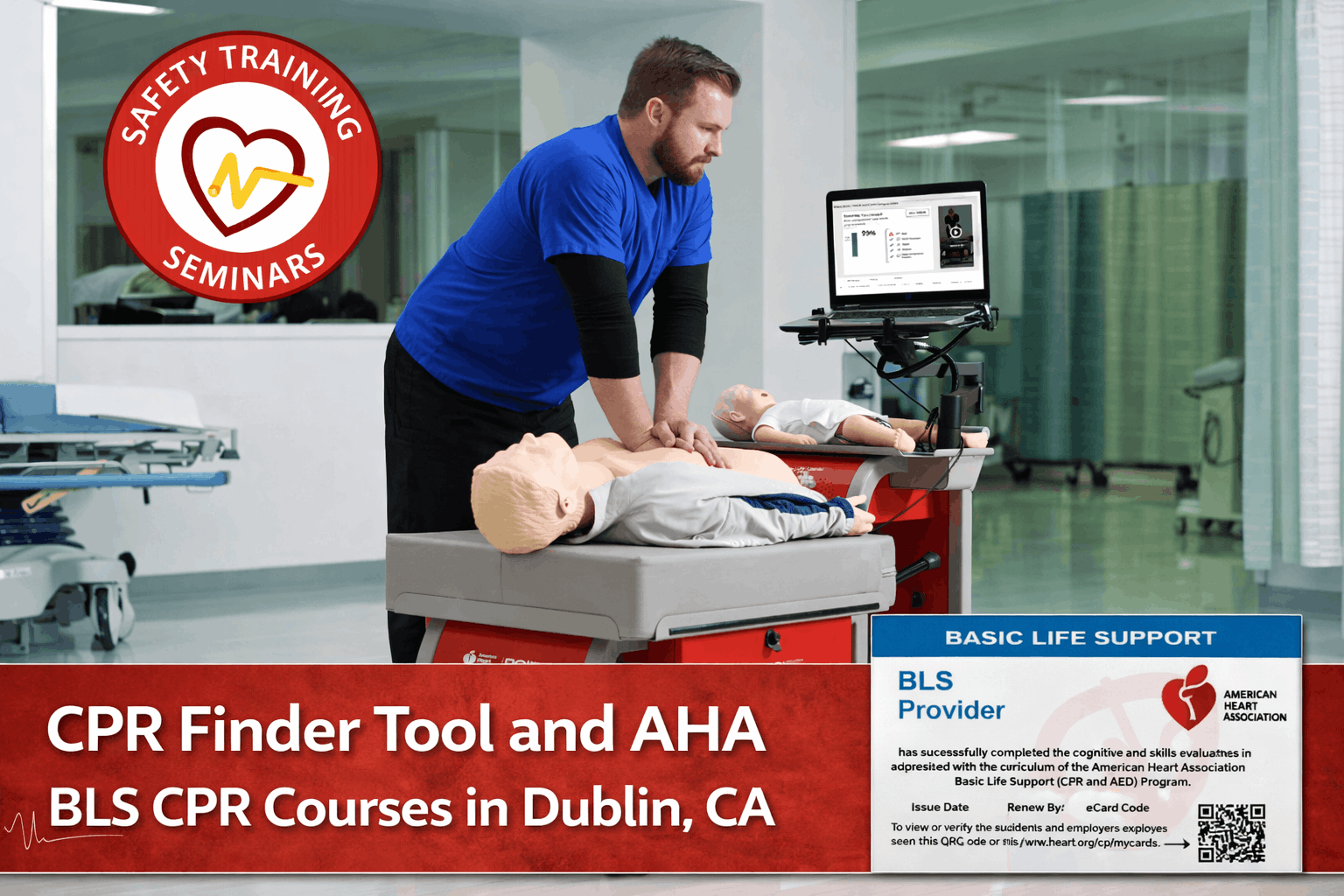
Students who successfully meet all course requirements receive the completion credential associated with their selected course. For the American Heart Association BLS course, the BLS Provider eCard is valid for two years.
Save the eCard email and keep a downloadable copy where you can access it for employment or school records. Check that your name is displayed correctly and note the expiration month.
A two-year card validity period does not prevent an employer, school, clinical program, or licensing organization from setting an earlier renewal deadline. Follow the requirement of the organization requesting your certification.
It is also helpful to set a calendar reminder several weeks before the card expires. This gives you time to compare renewal options and complete the course before the credential lapses.
Frequently Asked Questions About First-Time BLS Classes in Dublin
Can I take BLS if I have never taken CPR before?
Yes. A first-time participant can enroll in an initial BLS Provider course. Choose an initial course rather than assuming a renewal course is appropriate, and review any preparation instructions before attending.
Is the online part of BLS enough for certification?
Not by itself in a blended BLS pathway. The online portion must be followed by the required hands-on skills session before a course completion card is issued.
Do I need BLS for a nursing program in Dublin?
Many nursing and allied-health programs require BLS, but each program controls its own rules. Confirm the accepted provider, course format, card type, and submission deadline directly with your school or clinical placement coordinator.
What should I wear to my BLS class?
Wear comfortable clothing that allows you to kneel, bend, and perform repeated CPR practice. Avoid clothing or footwear that could restrict movement during manikin exercises.
How long is a BLS Provider card valid?
The American Heart Association BLS Provider eCard is valid for two years. Your employer or educational program may ask you to renew before the printed expiration date.
Where can I take a first-time BLS course in Dublin, CA?
Safety Training Seminars provides BLS and other CPR-related course options at its Dublin training center. Review the local course page, select the exact course required, and check all online and hands-on completion instructions before attending.
Start With the Requirement, Not Just the Course Name
Your first BLS experience will be easier when you know exactly what your employer, school, or clinical program expects. Confirm the required credential, accepted provider, learning format, hands-on component, and deadline before completing registration.
A BLS CPR Certification Course is usually intended for healthcare professionals, trained responders, and students entering clinical environments. Other learners may be better served by CPR/AED, First Aid, or pediatric training.
Safety Training Seminars offers local course options for Dublin residents and Tri-Valley professionals. Review the Dublin course-location page carefully and select the training that matches your written requirement rather than relying only on a general description of CPR certification.